Double meaning puns are the overachievers of comedy: one short line, two complete jokes. A single word or phrase carries a pair of interpretations, and the laugh arrives the moment your brain notices both readings at the same time. That small flash of recognition — “wait, it works both ways” — is what separates this style of humor from an ordinary one-liner. Below you’ll find more than 150 examples sorted by theme, a quick look at how the trick actually works, and a few tips for inventing your own.
What Gives a Pun Two Ways to Laugh?
Every entry on this list leans on the same mechanism: a word that refuses to sit still. In one reading it means something literal; in the other, something figurative, financial, romantic, or completely ridiculous. Your ear hears a single sentence, but your mind processes two, and the comedy lives in the gap between them.
Ambiguity: The Secret Engine of the Joke
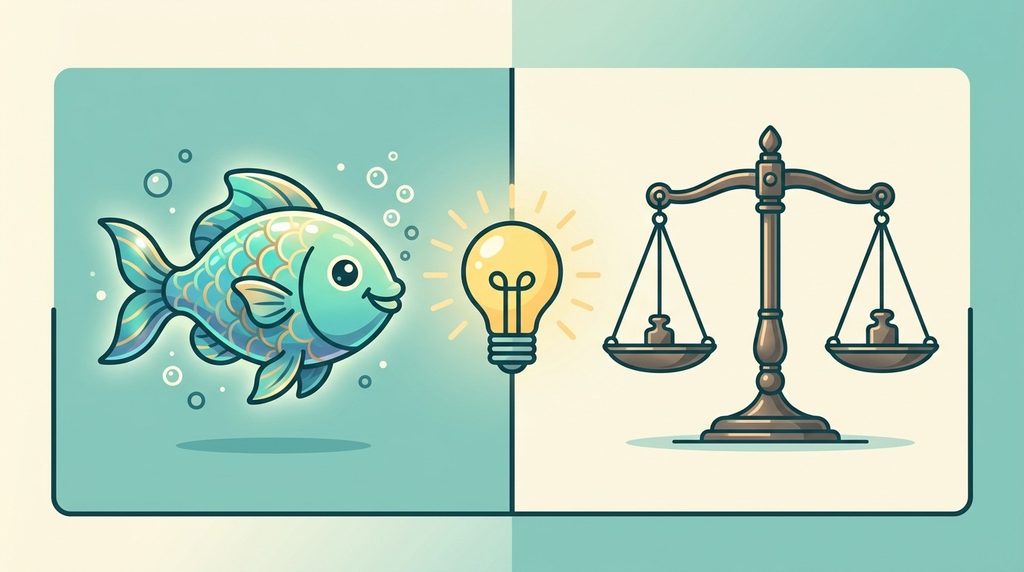
Linguists call this quality ambiguity — the property of language that lets one expression support more than one meaning. Take the sentence “The fisherman lost his scales.” Did he misplace his weighing equipment, or is something strange happening to his skin? Ordinary conversation works hard to remove that kind of confusion. A pun does the opposite: it hunts for ambiguity and shines a spotlight on it. The clever wording is deliberate, and the double reading is the entire point.
Homophones, Homonyms, and Twisted Idioms
Most puns with double meanings come from three sources. Homonyms are words spelled and pronounced identically but with unrelated definitions — “bill” can be a duck’s beak or a restaurant check. Homophones sound alike while being spelled differently, like “toad” and “towed.” Finally, idioms supply ready-made phrases (“in stitches,” “up to something”) that turn funny the instant you read them literally. Once you learn to spot these three patterns, you start hearing potential jokes in everyday speech.
The Big List: 150+ Puns With Built-In Double Meanings
The collection is numbered straight through so you can keep count. Borrow your favorites for captions, greeting cards, toasts, and group chats.
Classic One-Liners
These are the lines that made this style of humor famous — short, familiar, and impossible to hear only one way.
- The thief who stole a calendar got twelve months.
- A boiled egg every morning is hard to beat.
- Velcro? What a rip-off.
- The shovel was a truly ground-breaking invention.
- The claustrophobic astronaut just needed a little space.
- I stayed up all night wondering where the sun went — then it dawned on me.
- The cemetery is so popular that people are dying to get in.
- I didn’t like my beard at first, but it grew on me.
- The tallest building in town is the library; it has the most stories.
- When the past, the present, and the future walked into a room, things got tense.
- I have a photographic memory, but it never developed.
- Broken pencils are completely pointless.
- The wedding cake got emotional and ended up in tiers.
- The invention of the wheel really got things rolling.
- Sleeping comes so easily to me that I can do it with my eyes closed.
Food and Drink
The kitchen is full of words leading double lives — dough, ground, cheesy, seasoned.
- I’m on a seafood diet — every time I see food, I eat it.
- The mushroom gets invited to every party because he’s a fun guy.
- This coffee tastes like mud, which makes sense — it was ground a few minutes ago.
- The baker sold his secret recipe because he kneaded the dough.
- Please don’t go bacon my heart.
- The grape stopped rolling down the hill when it ran out of juice.
- Never tell an egg a joke — it will crack up.
- Cheese that doesn’t belong to you? That’s nacho cheese.
- I’d tell you my pizza joke, but it’s far too cheesy.
- I have a joke about butter, but I shouldn’t spread it.
- Lettuce celebrate — turnip the music!
- The banana went to the doctor because it wasn’t peeling well.
- Salt and pepper are the most seasoned advisors in the kitchen.
- The bread retired early because it had plenty of dough.
- Good waiters succeed because they bring so much to the table.
Animals
Nature documentaries never mention how much comedy is hiding in the animal kingdom’s vocabulary.
- A horse is a remarkably stable animal.
- Fish are easy to weigh because they carry their own scales.
- The duck bought a new hat and said, “Put it on my bill.”
- The leopard lost at hide-and-seek because he was always spotted.
- Never play cards with a cheetah.
- The crab refused to share his food — what a shellfish attitude.
- The frog’s badly parked car got toad.
- The dog stayed in the shade so he wouldn’t become a hot dog.
- Skunks attract attention wherever they go — they’re always making a scent.
- The owl with a sore throat didn’t give a hoot.
- Bees have sticky hair because they use honeycombs.
- Cows wear bells because their horns don’t work.
- The chicken crossing the road was pure poultry in motion.
- That pony can’t sing at all; she’s just a little horse.
- Elephants avoid computers because they’re terrified of the mouse.
Work and Office Life
Careers, promotions, and Monday meetings — all of it sounds different once the second meaning kicks in.
- The scarecrow earned a promotion for being outstanding in his field.
- My job at the calendar factory ended the day my days were numbered.
- The elevator business has its ups and downs.
- I’m reading a book about anti-gravity at work — it’s impossible to put down.
- The mathematician’s garden grew nothing but square roots.
- The tailor loved his customers and kept them in stitches.
- The accountant kept her job because she could always be counted on.
- Working at the shoe factory was sole-destroying.
- The electrician stayed calm under pressure because he knew how to conduct himself.
- The lumberjack got hired because everyone knew he could cut it.
- The astronomer’s career is really looking up.
- The gardener got promoted because she knew all the dirt.
- The origami studio closed after the business folded.
- The clockmaker never minded working overtime.
School and Learning
Classrooms run on vocabulary, which makes them the perfect place for words that grade on two levels.
- The math book looked miserable because it was full of problems.
- The teacher wore sunglasses to class because her students were so bright.
- The obtuse angle went swimming because it was over 90 degrees.
- The music teacher needed a ladder to reach the high notes.
- Good English teachers rely on comma sense.
- The librarian was completely booked this week.
- Geometry keeps students well-rounded.
- Santa’s helpers are, grammatically speaking, subordinate clauses.
- Nobody dropped the class on the history of glue — they were stuck with it.
- The chemistry student passed because she had all the right solutions.
- The art teacher knew exactly how to draw a crowd.
- Gym class isn’t for everyone, but it really works out.
Love and Romance
Sweet on the surface, sneaky underneath — these lines flirt in two directions at once.
- Are you a parking ticket? Because you’ve got fine written all over you.
- Honestly, we make a perfect pear.
- You’re one in a melon.
- I find you incredibly a-peeling.
- Olive you more than words can say.
- You’ve stolen a pizza my heart.
- I love you a latte.
- You must be a magnet, because you have an extremely attractive personality.
- Every time we’re together, sparks fly — it must be our chemistry.
- You must be a keyboard, because you’re exactly my type.
- I knew we clicked the moment we met.
- Falling for you was the easiest trip I’ve ever taken.
Sports and Fitness
Scorekeeping terms, training talk, and equipment names all moonlight as jokes.
- Tennis players struggle with romance because love means nothing to them.
- Basketball players are messy eaters — they never stop dribbling.
- Golfers always carry a spare pair of socks in case they get a hole in one.
- The runner was caught stealing — second base, naturally.
- The boxer had a genuinely knockout personality.
- Swimmers succeed because they dive right into their work.
- Marathoners take life’s problems in stride.
- Bowlers always have time to spare.
- My gym membership and I just didn’t work out.
- The bicycle couldn’t stand up for itself because it was two tired.
- The fencing champion always makes her point.
- Skiing teaches you to enjoy it when everything goes downhill.
Music
Musical terms were practically designed for this — half of them already mean something else.
- Guitarists spend most of their lives fretting.
- The pianist admitted the instrument was not her forte.
- The choir kid was always in treble.
- The drummer quit, but the band never missed a beat.
- The conductor handled the chaos because he was so composed.
- Musicians tend to make very sound decisions.
- You simply can’t beat a good drum solo.
- The orchestra’s performance was note-worthy.
- The string section got along because they stayed in tune with each other.
- The DJ’s garden was famous for its sick beets.
- The opera singer struggled at first but eventually found her range.
- The trumpet player blew the audience away.
Nature and Weather
The outdoors supplies endless raw material — beds, waves, and branches included.
- Rivers are the laziest things in nature — they never leave their beds.
- Gardeners genuinely dig their work.
- Trees find spring absolutely re-leafing.
- Every autumn, trees prove they can’t leaf well enough alone.
- Business at the flower shop is blooming.
- The ocean never says goodbye; it just waves.
- That mountain isn’t just scenic — it’s hill-arious.
- Lightning’s behavior is honestly shocking.
- Fog is hard to figure out because it’s so mist-erious.
- The wind lost the argument but kept blowing hot air.
- The volcano wrote its sweetheart lava letters.
- Beaches are always shore of themselves.
Technology
Modern gadgets brought a whole new dictionary of double meanings with them.
- My phone lost its glasses, and now it has no contacts.
- The computer caught a cold because someone left its Windows open.
- The printer started a band, but it broke up over a paper jam.
- The Wi-Fi and I finally have a strong connection.
- Robots take vacations just to recharge.
- The programmer went broke after burning through his cache.
- The old computer took a nap so it could refresh itself.
- The smartphone went to therapy to work through its hang-ups.
- Autocorrect keeps changing my mind.
- Batteries stay positive even on their worst days.
- The email needed counseling for its attachment issues.
- The ancient laptop still runs; it just can’t sprint.
Money and Business
Finance vocabulary is famously two-faced — interest, balance, and capital all play both sides.
- I left my banking career the day I lost interest.
- Old bankers never really retire — they just lose their balance.
- Every economy leans hard on its capital.
- His savings were put on ice, so now he has frozen assets.
- The coin factory shut down when it stopped making cents.
- Early investors in the elevator company got in on the ground floor.
- The stationery store survives on paper-thin margins.
- The watchmaker’s little shop just keeps ticking along.
- Sales at the candle store have slowly tapered off.
- The tailor’s startup turned out to be a perfect fit for investors.
Everyday Life
Ordinary household objects, it turns out, have been telling jokes this whole time.
- Need a boat? I Noah guy.
- The population of Ireland’s capital keeps Dublin.
- Never trust stairs — they’re always up to something.
- The belt was arrested for holding up a pair of pants.
- The blanket company promises to keep everyone covered.
- The mattress salesman failed twice but always bounced back.
- The flashlight at the surprise party was absolutely de-lighted.
- The vacuum cleaner’s life story really sucks you in.
- The window had one pane-ful day after another.
- The clock got hungry and went back four seconds.
- My ladder and I aren’t close anymore; it kept letting me down.
- The garbage collector spent the week down in the dumps.
- Mirrors deserve a moment of reflection.
- The soap opera left the whole town in a lather.
- The umbrella called in sick — it was feeling under the weather.
- The comb has a part in every single hairstyle.
How to Write Your Own Clever Wordplay
Reading these is fun, but building one from scratch is even better. The process is simpler than it looks.
Start with a topic and dump its vocabulary onto a page — if you pick “banking,” you’ll quickly list interest, balance, checks, savings, and credit. Next, hunt for the words living double lives: which ones also mean something completely unrelated? “Interest” covers both curiosity and a percentage rate, which is exactly the kind of overlap you need. Then build a sentence where both readings stay alive at once; the setup should support the literal meaning while the punchline activates the figurative one. If context accidentally kills one of the two interpretations, the joke collapses into a plain statement.
Two finishing touches matter. First, trim ruthlessly — the shortest setup almost always wins, because extra words give the listener time to see the twist coming. Second, say it out loud. Some pairs look identical on paper but sound clumsy in speech, and others (like homophones) only work when spoken.
Where These Two-for-One Jokes Work Best

A good double reading travels well. Social media captions love them because the surprise stops a scrolling thumb. Greeting cards and wedding toasts use them to sneak warmth past people’s defenses. Teachers drop them into lessons because a groan is proof the class was listening, and marketers build entire shop signs around them — a bakery called “Bread Winners” is doing exactly what item 19 on this list does. Even presentations benefit: one well-placed line early on tells the audience it’s safe to relax.
Frequently Asked Questions
What exactly are double meaning puns?
They’re jokes built on a word or phrase that supports two valid interpretations at the same time. The humor comes from your brain registering both readings in a single instant — one sentence, two punchlines.
Are they the same thing as double entendres?
They’re close cousins, not twins. A double entendre traditionally hides a risqué second meaning beneath an innocent surface, while the lines in this collection keep both meanings family-friendly. The mechanism — planned ambiguity — is identical; only the content differs.
Why do people groan instead of laughing?
The groan is actually a compliment. It signals that the listener’s brain got briefly tricked, caught the trick, and slightly resents how much it enjoyed the whole thing. Comedians treat a loud groan as a standing ovation in disguise.
Can one line carry more than two meanings?
Occasionally. Triple-layered wordplay exists, but it’s rare because each extra meaning makes the sentence harder to keep natural. Two clean readings almost always beat three strained ones.
The Last Laugh
Great wordplay rewards attention: the more carefully you listen, the more the language gives back. Keep a few of these lines in your pocket for captions, cards, and awkward silences, and try drafting your own using the word-bank method above. And if this collection of double meaning puns brightened your day even a little, feel free to say the jokes grew on you.
Also read this articel: 350+ Car Puns That’ll Drive You Wild With Laughter

Well Smith is the brain behind Puns Pop, serving fresh wordplay and clever puns daily. With a sharp sense of humor and a love for laughter, he turns everyday moments into punchlines. From food jokes to work humor, Well brings a witty twist to life, one pun at a time.